Best roofing materials for salt air exposure 2026
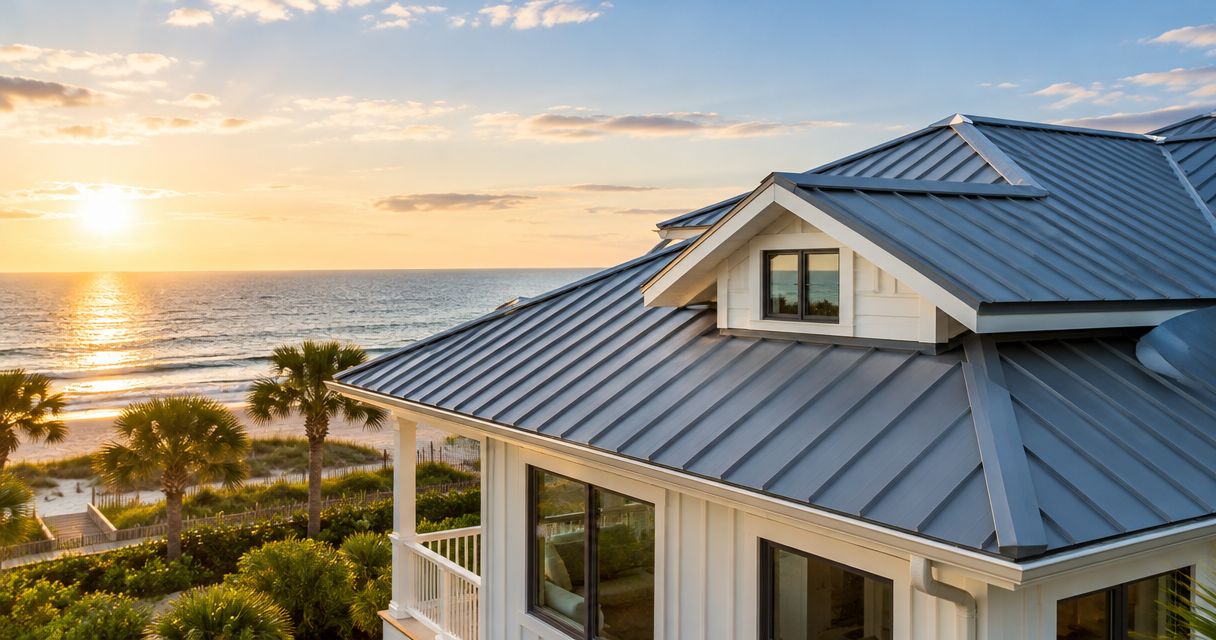
Best overall for a lightweight replacement: exposure-rated coated steel. Best non-metal option: terracotta tiles. Best specialist metal option: marine-suitable aluminium. This 2026 guide compares the best roofing materials for salt air exposure, including concrete tiles and natural slate, and explains the checks that matter before you choose.
TL;DR
- Exposure-rated coated steel is the leading lightweight roofing option when its documented coastal limits suit your property.
- Terracotta tiles avoid metal corrosion, but fixings, flashings and gutters still need coastal specifications.
- The best roofing materials for salt air exposure depend on exposure, roof pitch, structural capacity and maintenance access.
- Reroofing Melbourne provides residential re-roofing, guttering and cladding services for Mornington Peninsula homeowners.
Why this matters
Salt-air roofing is a whole-roof decision. A suitable roof covering does not protect unsuitable screws, valley flashings or gutters from corrosion. The weak component still needs attention.
A sheltered home in Rosebud and an exposed property near the shoreline in Sorrento need their own assessments. Suburb names alone do not establish exposure. Wind direction, breaking surf, shelter and surfaces that rain cannot wash all matter.
Reroofing Melbourne is best suited to Mornington Peninsula homeowners seeking residential re-roofing, guttering and cladding services. Start with the property's conditions, then choose the material.
This guide compares 5 material options. The ranking is a decision guide, not a claim that one material suits every coastal roof.
What makes the best roofing material for salt air?
Use these criteria for your 2026 shortlist before comparing colours or profiles:
- Documented exposure suitability: Match the exact material and finish to the manufacturer's coastal installation limits. A general claim of coastal suitability is not enough.
- Compatible components: Specify fixings, flashings, gutters and other metals together. Unsuitable contact or runoff between materials creates corrosion risks.
- Structural fit: Check the roof pitch, framing and support requirements. Changing from lightweight sheeting to heavy tiles is not a like-for-like substitution.
- Weather detailing: Assess wind-driven rain, penetrations, drainage and roof edges. The covering is only part of the weatherproofing system.
- Maintenance access: Identify sheltered surfaces, leaf traps and areas needing cleaning. Choose a system you can maintain safely.
Choose the roofing system that meets the exposure conditions in writing, not the material with the strongest sales claim.
Coastal roofing materials at a glance
| Material | Best for | Standout feature | Key limitation |
|---|---|---|---|
| Exposure-rated coated steel | Lightweight residential replacement | Sheet roofing without the weight of tiles | Suitability depends on the exact coating and exposure limits |
| Terracotta tiles | A non-metal covering on a suitable roof | Clay tile bodies do not rust | Weight, pitch and metal accessories still need checking |
| Marine-suitable aluminium | Specialist lightweight metal roofing | Aluminium forms a protective oxide layer | Requires compatible fixings and careful metal separation |
| Concrete tiles | Existing concrete-tile roofs | Retains a familiar tiled roof format | Heavy covering; surface condition and fixings need attention |
| Natural slate | Traditional roofs with suitable structural support | Stone covering that does not rust | Specialist installation and structural assessment are essential |
For a 2026 replacement, treat this table as a shortlist. Approval must relate to the actual product, roof design and site, not just the material category.
1. Exposure-rated coated steel: best for lightweight replacement
Coated steel roofing uses a protective coating system over a steel base. It is a practical starting point when you want sheet roofing without introducing the weight of a tiled covering.
The crucial distinction is the specification. Standard coated steel and products intended for more demanding coastal conditions are not interchangeable. Ask for the exact product and the manufacturer's site restrictions before accepting a recommendation.
Coated steel pros:
- Lightweight compared with concrete, terracotta and slate coverings.
- Sheet profiles offer options for different roof designs, subject to pitch requirements.
- Matching roofing components can be specified as a coordinated system.
Coated steel cons:
- Damaged coatings, unsuitable fixings and metal debris create corrosion risks.
- Some locations fall outside a particular product's coastal limits.
Best for: Homeowners replacing an existing sheet roof, or considering a tile-to-metal conversion after structural and design checks.
Request written details for roof sheets, screws, flashings and drainage components. Also ask how cutting debris will be removed and how sheltered areas should be maintained. Those details matter more than a colour name.
Verdict: Buy exposure-rated coated steel only when the complete specification suits your coastal site.
2. Terracotta tiles: best for a non-metal roof covering
Terracotta roof tiles are fired clay. The tile bodies do not rust, which makes terracotta a useful option when you want to avoid a metal roof surface in salt air.
That benefit does not make a tiled roof corrosion-free. Tile fixings, valleys, flashings and gutters still need materials appropriate to the location. The framing must also support the selected tile system.
Terracotta tile pros:
- Clay tile bodies are not subject to metal corrosion.
- Individual damaged tiles can be replaced without replacing the entire covering.
- Suits homeowners who want a traditional tiled roof appearance.
Terracotta tile cons:
- Heavier than sheet-metal roofing and dependent on adequate structural support.
- Tiles can crack under impact or careless foot traffic.
Best for: Homes with suitable pitch and framing where a non-metal covering and tiled appearance are priorities.
Check the tile manufacturer's installation requirements, including roof pitch and fixing arrangements. Assess the condition of battens, underlay and flashings during replacement rather than carrying hidden defects into the new roof.
Verdict: Buy terracotta tiles when the structure suits them and the metal accessories receive equal attention.
3. Marine-suitable aluminium: best for specialist metal roofing
Aluminium roofing offers a lightweight alternative to steel. Its natural oxide layer helps resist corrosion, but aluminium is not immune to every coastal condition.
The alloy, finish, fasteners and adjoining materials all affect performance. In particular, aluminium needs careful separation from incompatible metals and protection from unsuitable runoff.
Aluminium roofing pros:
- Lightweight roof covering.
- Does not develop the red rust associated with exposed steel.
- Offers a metal-roof option where a suitable aluminium system meets the design requirements.
Aluminium roofing cons:
- Incorrect metal contact can cause galvanic corrosion.
- Installation must account for thermal movement and the chosen product's detailing requirements.
Best for: Homeowners whose site assessment supports aluminium and whose installer can specify the complete system.
Do not accept a generic description such as marine-grade metal without product documentation. Ask which alloy and finish are proposed, which fixings are compatible, and how flashings and gutters will connect.
Verdict: Hold until the exact aluminium system and coastal suitability are documented.
4. Concrete tiles: best for an existing concrete-tile roof
Concrete tiles provide a non-metal roof surface in a familiar tiled format. They belong on the shortlist when your home already has a concrete-tile roof and you want to retain that form.
Salt exposure does not cause concrete tile bodies to rust. However, the condition of the tiles, their surface finish and the supporting roof system still matters. A sound-looking covering does not establish that the fixings or flashings are sound.
Concrete tile pros:
- Tile bodies avoid the corrosion mechanism of steel roofing.
- Individual damaged tiles can be replaced where suitable matching tiles are identified.
- Preserves a tiled appearance without changing to sheet roofing.
Concrete tile cons:
- Heavy covering that requires suitable framing.
- Tiles can absorb moisture, and surface finishes weather with exposure.
Best for: Existing concrete-tile homes where the structure and roof pitch suit the replacement system.
Ask whether the roof needs isolated repairs or full replacement. A recommendation should distinguish damaged tiles from problems in the underlay, battens, valleys or drainage. These are different jobs.
Verdict: Buy concrete tiles for a suitable tiled roof, not as an automatic upgrade from lightweight sheeting.
5. Natural slate: best for a traditional roof with suitable support
Natural slate is a stone roof covering. The slate itself does not rust, but the roof still relies on correctly selected fixings, flashings and weatherproof details.
Slate belongs on a specialist shortlist rather than a default coastal recommendation. Roof structure, slate quality, installation skill and repair access all need attention before you commit.
Natural slate pros:
- Non-metal covering that is not subject to rust.
- Distinctive natural appearance for traditional roof designs.
- Individual slates can be replaced by an appropriately skilled roofer.
Natural slate cons:
- Heavy covering requiring structural assessment.
- Brittle material that needs careful installation and specialist repair methods.
Best for: Homes where a slate roof suits the architecture and the supporting structure.
Specify the slate, fixing method and flashing materials together. Do not treat the stone's resistance to corrosion as evidence that every part of the roof will resist salt exposure.
Verdict: Hold unless structural suitability and specialist installation are confirmed.
Check the components beneath the material choice
A good covering cannot compensate for a poorly specified roof system. Before approving a 2026 roofing proposal, check these connected parts:
- Roof covering: Exact material, finish, profile and exposure restrictions.
- Fixings and flashings: Compatible metals, suitable fastening and properly detailed junctions.
- Drainage: Gutters, outlets and downpipes assessed together, including overflow paths.
- Maintenance: Safe access, cleaning instructions and attention to sheltered surfaces.
Salt deposits can remain on surfaces that rain does not reach. Eaves, sheltered edges and covered sections deserve specific maintenance advice rather than an assumption that rainfall cleans the whole roof.
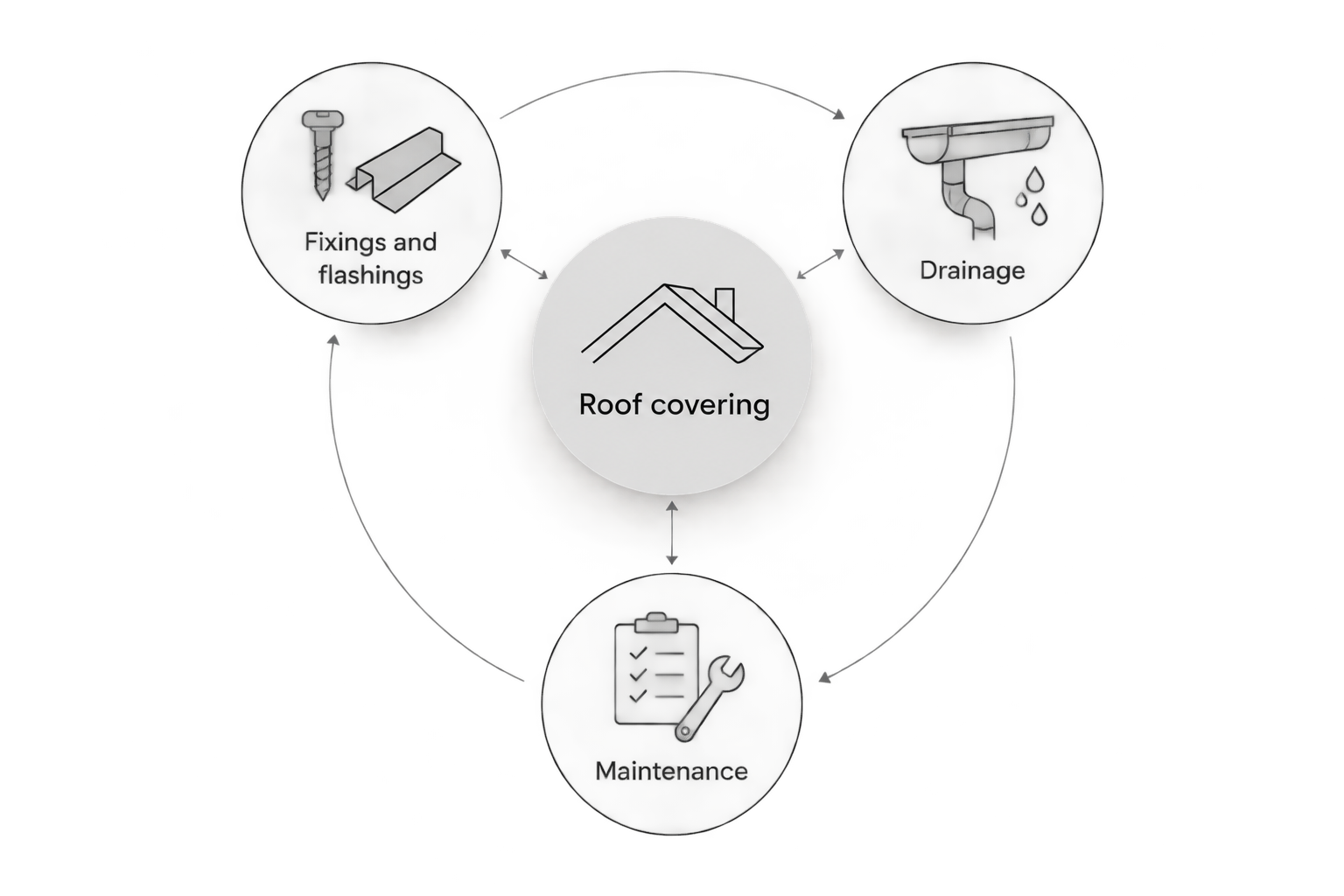
Coastal suitability depends on the connected roof system, not the covering alone.
Ask who is responsible for checking existing gutters and flashings when the roof covering changes. Leaving that question open creates a gap between the replacement roof and the components it must work with.
Discuss your coastal roof
Ask about residential re-roofing, guttering and cladding for your Mornington Peninsula home.
How the materials are ranked
This 2026 ranking prioritises documented exposure suitability, compatible components, structural fit, weather detailing and maintainability. Coated steel leads the lightweight replacement shortlist; terracotta leads when a non-metal tile covering is the priority.
The ranking does not replace a property inspection or product-specific instructions. There is no universal shoreline distance that makes every roof product suitable.
When comparing 2 quotes, line up the specifications rather than just the material headings. Both proposals should explain the covering, accessories, preparation, drainage work and maintenance responsibilities. Otherwise, you are comparing different jobs.
Which coastal roofing material should you choose?
Start with exposure-rated coated steel for a lightweight replacement, then test that choice against your site's conditions. If you prefer a non-metal roof surface and your structure supports tiles, compare terracotta next.
Consider aluminium when the product documentation and installation details support it. Keep concrete tiles and slate tied to the home's structure and roof design rather than choosing them on corrosion resistance alone.
For Mornington Peninsula homeowners, Reroofing Melbourne's residential re-roofing, guttering and cladding services match that whole-roof discussion. Ask for a clear scope before choosing a finish.
FAQ
What are the best roofing materials for salt air exposure?
Exposure-rated coated steel, terracotta tiles and suitably specified aluminium are useful starting points. The best choice depends on documented coastal suitability, roof pitch, structural support and compatible accessories.
Is a tiled roof better than a metal roof near the beach?
A tiled roof is not automatically better than a metal roof near the beach. Terracotta and concrete tile bodies do not rust, but their fixings and flashings still need coastal specifications; metal roofing needs a suitable material and coating system.
Does aluminium roofing corrode in salt air?
Aluminium can corrode in coastal conditions despite its protective oxide layer. Select a suitable alloy and finish, use compatible fixings, and prevent contact or runoff involving unsuitable metals.
Can I replace roof tiles with metal roofing?
A tile-to-metal roof conversion requires checks of the structure, fastening, roof geometry and applicable building requirements. A lighter covering does not remove the need to assess wind resistance and weatherproof detailing.
How close to the ocean can coated steel roofing be used?
The permitted exposure depends on the exact roofing product and its manufacturer's requirements. Distance from the shoreline alone does not describe breaking surf, wind exposure or sheltered salt accumulation.
Do coastal roofs need special screws and gutters?
Coastal roofs need fixings and drainage components that suit both the exposure and the roof material. Incompatible metals and unsuitable runoff paths create corrosion risks even when the roof sheets themselves are appropriate.
What should I ask a roofer before choosing a coastal roof?
Ask for the exact roofing product, written exposure requirements and compatible component specifications. Also request an explanation of structural checks, drainage work and maintenance responsibilities.
One last thing
For your 2026 roof replacement, collect 3 documents before approving the material: the product's exposure requirements, the itemised roof specification and the maintenance instructions. Read them together.
A product described as suitable for coastal use still needs the right site, installation and care. If the proposal names the roof covering but leaves the screws, flashings and gutters vague, the specification is not finished.